

Qu'est-ce que NoisedB ?
NoisedB est une base de données grand public qui contient les niveaux de bruit des avions certifiés selon les normes et pratiques recommandées de l'OACI (Organisation Internationale de l'Aviation Civile) ou le règlement américain FAR (Federal Aviation Regulations).
NoisedB a été élaborée, sous l'égide de l'Organisation Internationale de l'Aviation Civile (OACI), pour répondre à un besoin exprimé par l'OACI et par le CEAC (Conférence européenne de l'Aviation civile) de disposer d'une base de données internationale contenant les niveaux de bruit certifiés par les autorités. Conçue, développée et actualisée par la Direction Générale de l'Aviation Civile française (DGAC), NoisedB est une source d'information pour les autorités de contrôle des aéronefs, les exploitants d'aéroport, les instances locales de concertation et constitue une référence pour la révision des normes de certification.
Contenu
La base de données contient les niveaux de bruit des avions certifiés selon la réglementation de l'OACI, Annexe 16, Chapitres 2, 3, 4 et 14 ou selon la FAR Part 36, Stage 3, Stage 4 et Stage 5. Il est fait mention d'un ensemble de caractéristiques parmi lesquelles on peut citer la masse maximale au décollage, la version, le type de moteur et le cas échéant les modifications propre à chaque avion. Les données sont disponibles sous forme de fiche individuelle ou de tableur regroupant plusieurs appareils.
NOTE : Cette base ne revêt pas le caractère officiel des informations qui figurent dans le certificat acoustique délivré par l'Etat d'immatriculation.
Procédure d'actualisation
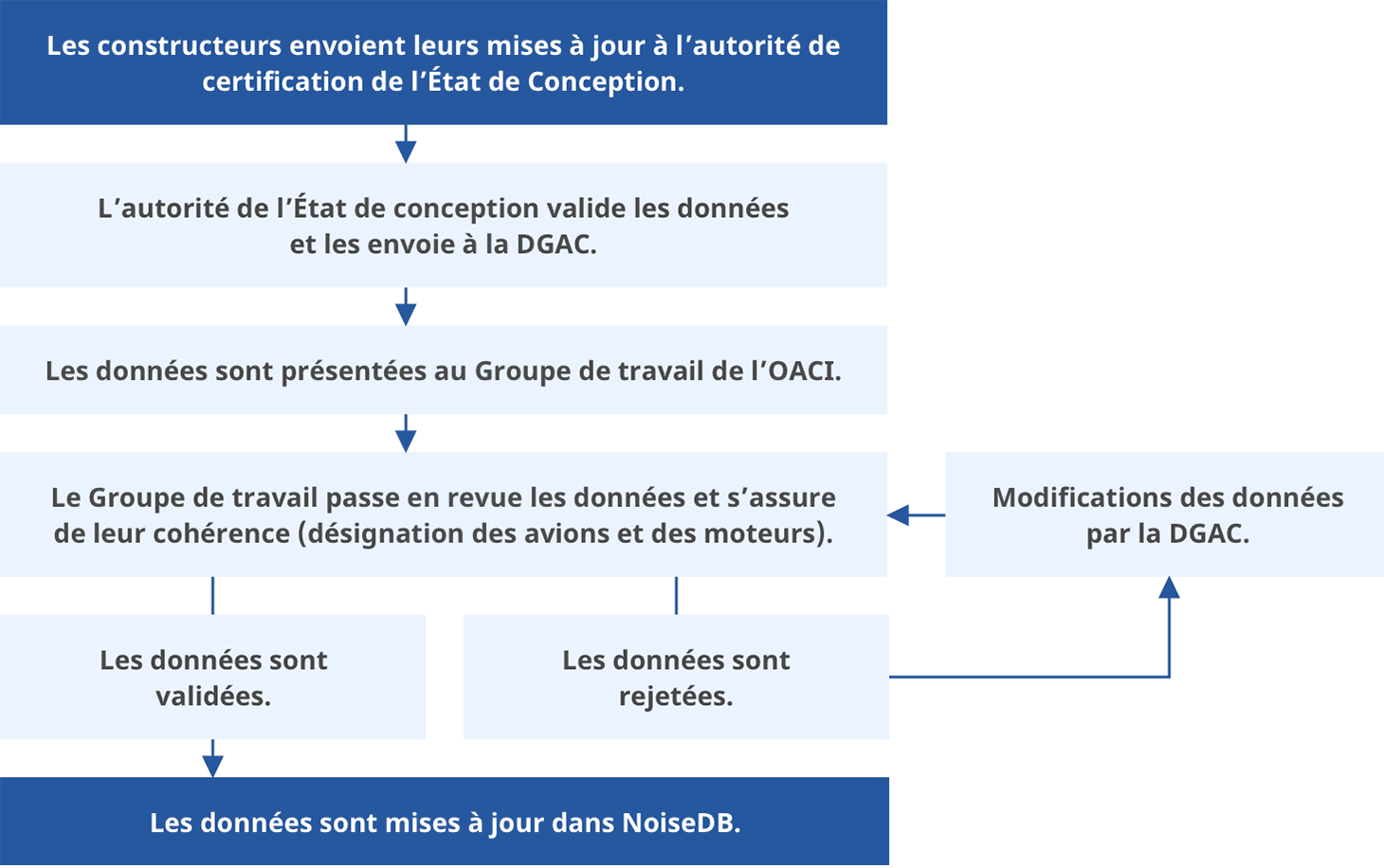
- La DGAC demande les nouvelles données aux autorités de certification ;
- L'autorité se réfère à ses constructeurs qui, sur une base volontaire, fournissent les nouveaux renseignements selon le cas ;
- L'autorité approuve les données et les transmet à la DGAC ;
- La DGAC, dans son rôle de maintien de la base de données, vérifie l'intégrité des informations fournies ;
- La DGAC présente au Groupe de travail sur le bruit des aéronefs du Comité de la protection de l'environnement en aviation (CAEP) de l'OACI la base de données actualisée pour approbation ;
- Le groupe de travail vérifie la cohérence du format des données (par exemple, cohérence dans le format des désignations d'avions et de moteurs) ;
- La version révisée de la base de données est publiée sur le site web de l'OACI.
NOTE 1. Il incombe à l'État de conception de vérifier l'exactitude des données communiquées à la DGAC.
NOTE 2. L'autorité suit sa procédure interne de mise à jour. La fourniture d'informations dépend des ressources allouées à cette tâche.
NOTE 3. La base de données est actualisée lors des réunions plénières du Groupe de travail sur le bruit des aéronefs du Comité de la protection de l'environnement en aviation (CAEP) de l'OACI
Normes acoustiques de l'OACI
Annexe 16, Volume I – Bruit des aéronefs
Avion à réaction subsonique pour lequel la demande de certificat de type est présentée avant le 6 octobre 1977.
- Normes acoustiques de l'OACI
- Annexe 16
- Volume I
- Chapitre 2
Avion à réaction subsonique pour lequel la demande de certificat de type est présentée le 6 octobre 1977 ou à une date ultérieure et avant le 1er janvier 2006.
Avion à hélices de plus de 8618 kg pour lequel la demande de certificat de type est présentée le 1er janvier 1985 ou à une date ultérieure et avant le 1er janvier 2006.
- Normes acoustiques de l'OACI
- Annexe 16
- Volume I
- Chapitre 3
Avion à réaction subsonique et avion à hélices de plus de 55000 kg pour lesquels la demande de certificat de type est présentée le 1er janvier 2006 ou à une date ultérieure et avant le 31 décembre 2017.
Avion à réaction subsonique et avion à hélices de moins de 55000 kg pour lesquels la demande de certificat de type est présentée le 1er janvier 2006 ou à une date ultérieure et avant le 31 décembre 2020.
Avion à hélices de plus de 8618 kg et moins de 55000 kg pour lequel la demande de certificat de type est présentée le 1er janvier 2006 ou à une date ultérieure et avant le 31 décembre 2020.
- Normes acoustiques de l'OACI
- Annexe 16
- Volume I
- Chapitre 4
Avion à réaction subsonique et avion à hélices de plus de 55000 kg demande de certificat de type présentée le 31 décembre 2017 ou à une date ultérieure.
Avion à réaction subsonique et avion à hélices de moins de 55000 kg demande de certificat de type présentée le 31 décembre 2020 ou à une date ultérieure.
Avion à hélices de plus de 8618 kg et moins de 55000 kg demande de certificat de type présentée le 31 décembre 2020 ou à une date ultérieure.
- Normes acoustiques de l'OACI
- Annexe 16
- Volume I
- Chapitre 14
NOTE La rigueur des normes suit l'évolution des progrès technologiques. Par exemple, le Chapitre 14 exige des niveaux de bruit inférieurs à ceux du Chapitre 4.
Les niveaux de bruit certifiés de l’avion émanent de mesures de bruit réalisées au sol, à l’occasion des essais de certification, pour des conditions de référence, aux points suivants:
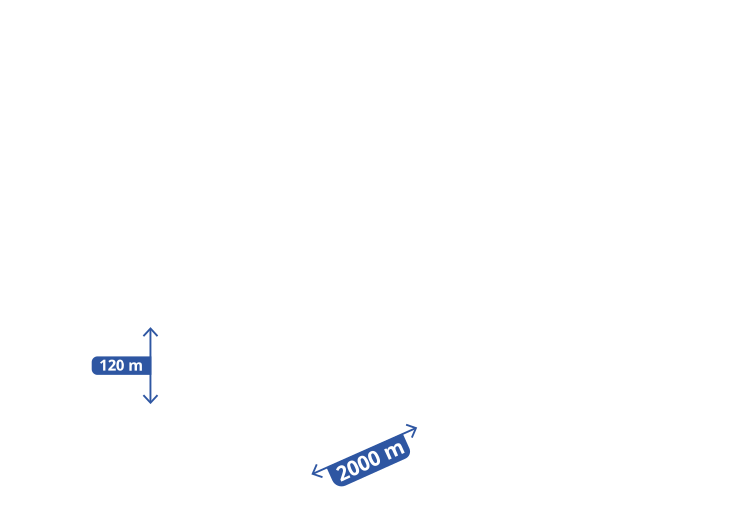



(Décollage à puissance maximale)
*650 m pour le Chapitre 2
(Décollage après réduction)
